I came across a post recently exploring whether “AI is reversing the agile revolution.”
It stuck with me, not because agile is wrong or waterfall is obsolete, but because it exposes a bigger question, a bigger shift:
AI isn’t necessarily reversing agile.
AI is more likely to reduce the cost of upfront planning.
For most of software history:
• Big upfront design = slow, expensive, risky
• Agile = cheap course correction + rapid learning
Agile became dominant because humans are slow at producing and updating detailed plans. The world changes faster than we can document it.
But with AI:
• Creating 20 page specifications take minutes, not weeks
• Re planning takes seconds, not days
• Documentation can stay in sync automatically
• Architecture exploration is disposable, not sunk cost
When the cost of planning approaches zero, the economics change. What once looked “anti agile” (heavy specification) becomes just in time precision.

And this isn’t just about QA. It touches every role in delivery — from product managers writing specs, to architects exploring options, to compliance teams demanding traceability.
But in QA, the implications are especially profound.
Assurance has always lived in the tension between upfront clarity and iterative discovery. That tension is where the new role of Quality Intelligence Engineer (QIE) emerges.
QIE reframes assurance for an AI driven world:
• AI planning ≠ waterfall planning
• AI assisted assurance is fast, iterative, and explainable
• Risk models, dependency maps, and test strategies can be regenerated instantly
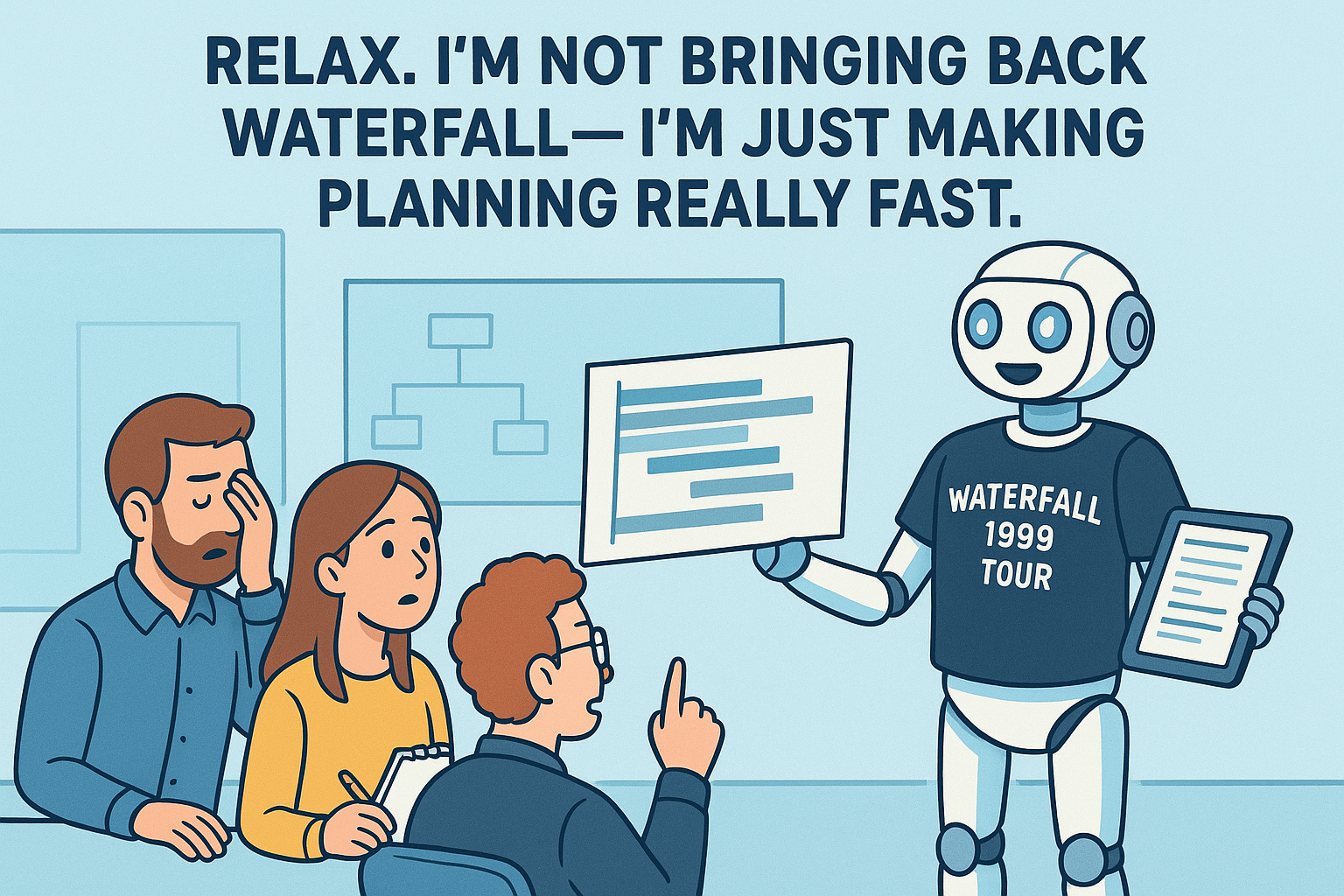
The shape may resemble waterfall.
The dynamics resemble agile (on fast forward).
Of course, I must say, AI isn’t perfect.
• LLM plans can hallucinate.
• Heavy upfront planning can still mislead if assumptions are wrong.
• Not every team has the maturity to articulate requirements clearly.
• …The list goes on…
That’s why QIE is about human in the loop assurance — not replacing people but amplifying them.
Because now the bottleneck isn’t documentation. And it isn’t coding. It’s human decision making.
The faster a team converges on a precise problem definition, the faster AI can deliver value — whether that’s a design, a risk model, or a complete test plan.
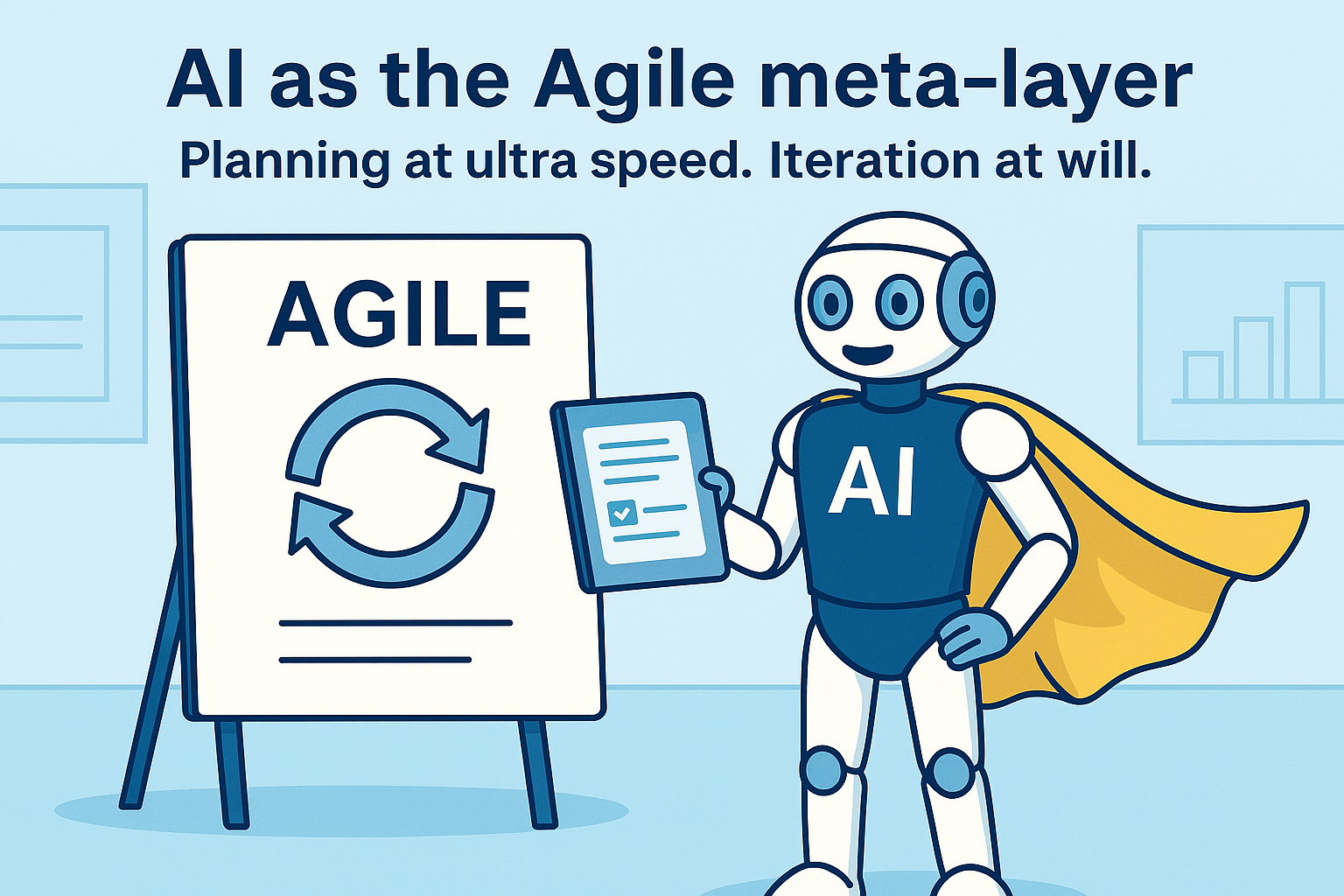
This is agile at the meta level:
planning → validating → revising
instead of
coding → testing → refactoring.
For QIE, this is the coming frontier:
• Assurance that reasons, not just execution
• Automation that justifies, not just runs
• Documentation that’s alive, not a chore
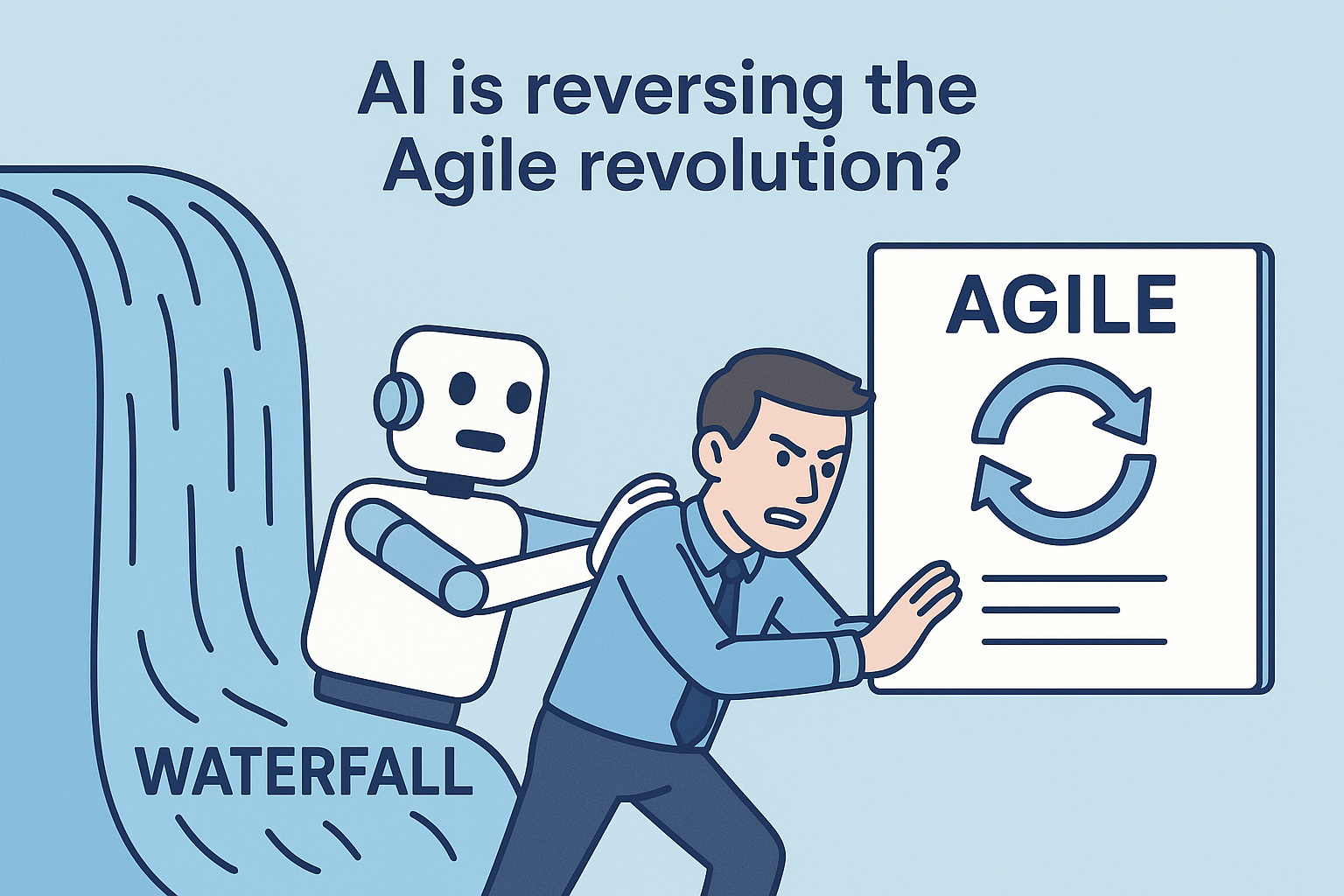
AI isn’t reversing agile.
It’s redefining where iteration happens. And in QA — and across delivery — that shift may be the most transformative of all.
How is your organisation balancing upfront clarity with iterative discovery in the age of AI?
#QualityIntelligence #AIQA #QAInnovation #TechEthics #Governance #FutureOfWork #DigitalTransformation #SoftwareTesting #RiskEngineering #ComplianceTesting #RegTech